Agile testing adapts to change with short cycles and collaboration, while traditional testing follows rigid phases. Learn which approach fits your team's needs.
By Pheobe
May 12, 2026
Share this article
he core difference between agile testing and traditional testing is timing. Agile testing happens as you build, inside each sprint; traditional testing happens after development finishes, as a separate phase. But agile testing is more than earlier timing: it's continuous, collaborative, and quick to adapt to what you learn, where traditional testing follows a plan fixed up front.
At a glance
Timing: agile tests features as they're built; traditional testing starts after development completes
Mindset: agile treats testing as continuous learning that adapts as you go; traditional verifies against a plan fixed up front
Teams: agile testers work alongside developers; traditional keeps a separate testing phase or team
Documentation: agile runs on lightweight test prompts; traditional on formal test cases
Bug cost: defects cost more to fix the later they're found, sometimes hundreds of times more
Best fit: most software teams lean agile; regulated industries often need traditional's paper trail
Most teams don't follow one approach religiously. They pick and choose based on the project: a startup might test as it builds to move fast, while a medical device company might need traditional testing's documentation trail for regulatory approval. The rest of this post walks through the differences and trade-offs so you can decide what fits. (For agile testing on its own terms, see our agile testing guide.)
What are the key differences between agile testing and traditional testing methodologies?
The fundamental difference is when testing happens and how teams work together.
Think of traditional testing like building a house. You finish all the framing, plumbing, and electrical work, then call in the inspector. If something's wrong, you're ripping out walls. Agile testing is more like having the inspector walk the site every day, catching problems while the wall studs are still exposed.
Agile testing happens continuously throughout development. Testers work alongside developers in short cycles (often called sprints), testing features as soon as they're built. When something breaks, the team fixes it immediately rather than filing it away for later.
Traditional testing separates building from testing into distinct phases. Developers finish everything first, then hand it over to testers who work through a detailed test plan. Bugs found during testing often mean going back to fix things that were "done" weeks ago. This approach is common in waterfall projects, where each phase finishes before the next one starts.
Here's how they differ in practice:
Aspect
Agile testing
Traditional testing
Timing
Continuous throughout development
After development completes
Team structure
Testers work with developers
Separate testing team or phase
Documentation
Lightweight test prompts
Detailed test cases with formal steps
Test planning
Evolves sprint by sprint
Comprehensive upfront plan
Bug fixing
Fixed the same day or week
Logged for later fix cycles
Requirements
Can change between sprints
Fixed at project start
The actual testing – checking if software works – stays the same. What changes is the paperwork, the timing, and how quickly problems get fixed.
What are the benefits of agile testing over traditional testing?
Testing as you build catches problems while developers still remember writing the code. When a tester finds a bug the same day it was created, the developer can fix it immediately while they're still in that headspace. Find that same bug three weeks later, and the developer has to dig through old code trying to remember what they were thinking.
The compound effect matters more than individual catches. When testers check features within hours, developers learn patterns faster. They see what breaks and adjust their approach. After a few sprints, the team writes cleaner code because feedback happened quickly enough to build better habits.
Key advantages:
Faster releases – Testing doesn't hold up launches because it happens throughout, not after
Cheaper bug fixes – NIST's study of the economics of software testing found that the cost of fixing a defect rises steeply through the lifecycle, from trivial at the requirements stage to hundreds of times more once software is in operation
Better collaboration – Testers and developers communicate naturally rather than through formal bug reports
Realistic progress tracking – Stakeholders see working features week by week rather than waiting months for a "testable" version
Testing throughout development requires discipline, though. If testing always gets pushed to Friday afternoon, you're doing mini-waterfall with better branding.
What are the core differences between agile and waterfall testing?
Waterfall is the project management methodology most associated with traditional testing. In a waterfall project, work flows in one direction – you plan, design, build, then test, in that strict order. (For how testing fits into the agile equivalent, see the agile software development lifecycle.) It's where traditional testing gets its reputation for being a separate phase that happens at the end.
Waterfall assumes you can define everything upfront – requirements, design, implementation plan, test cases – before building anything. Testing checks that what got built matches the original plan.
Agile assumes requirements will shift as you learn what users actually need. Testing checks each piece works while staying flexible about what "works" means as understanding evolves.
Waterfall testing focuses on:
Detailed documentation so nothing gets missed
Formal test cases for repeatable checks
Clear pass/fail based on original requirements
Paper trail from requirements through results
Agile testing focuses on:
Quick feedback to enable course corrections
Lightweight test prompts that don't need constant updating
Testing both expected behavior and surprises discovered along the way
Working software that demonstrates quality
Neither is universally better. Regulated industries need waterfall's paper trail for compliance. Consumer software benefits from agile's ability to pivot based on user feedback.
Most teams land somewhere between extremes. Formal test cases for critical stuff (payment processing, security features – where test case design techniques are worth the effort) and exploratory testing for everything else. Or detailed tests for complex integrations but lightweight testing for routine features.
Choose consciously based on actual constraints – regulations, team experience, project complexity – rather than defaulting to whatever's fashionable.
What are the challenges of moving from traditional to agile testing?
The biggest hurdle is accepting less upfront certainty. Traditional testing promises a detailed test plan before anything starts. Agile testing (iterative because you repeat cycles of building and testing) means planning just enough for the next sprint and trusting your team to figure out the rest as they go.
Testers used to detailed test cases struggle with shorter test prompts. Instead of "Step 1: Click login button. Step 2: Enter username. Step 3..." you get "verify password complexity rules" or "test expired sessions." This requires testers to think for themselves rather than follow a rigid step-by-step test case.
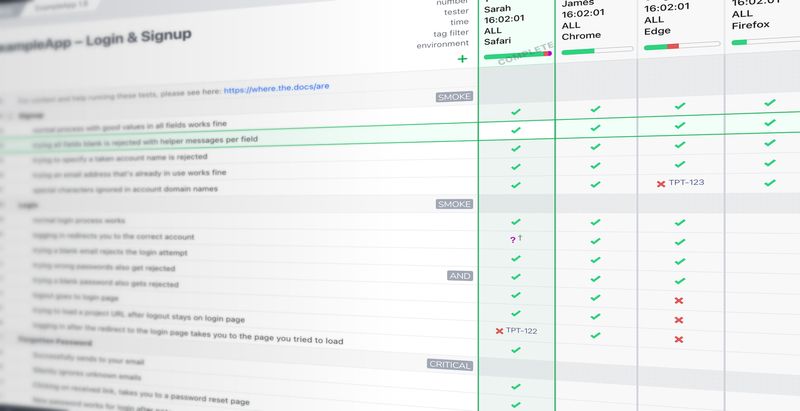
Teams also need to rethink how they track progress. Traditional test case management tools feel clunky for agile work. Many teams switch to simpler approaches – checklists in tools like Testpad, or just lists in their project management system. Track what needs testing and what's been checked without drowning in documentation.
Common friction points:
Release gates disappear – No "testing phase" where you catch everything. Testing happens continuously, which means living with some uncertainty.
Incomplete features – You're testing half-built functionality, which needs judgment about what's ready versus what's still being worked on.
Regression testing gets messy – Regression testing means re-checking things that worked before to make sure new changes didn't break them. Without formal test cases, teams worry they'll miss something. This is where simple checklists or lightweight test management becomes essential.
Stakeholder confusion – Clients or managers expecting comprehensive test reports need help understanding how continuous testing provides the same confidence.
Start where you are and gradually reduce documentation rather than torching everything overnight.
How do agile and traditional testing work with test management tools?
Test management tools help teams organize their testing – what needs checking, who's doing it, what passed, what failed. But agile and traditional testing need different things from these tools.
On the automated side, agile teams lean on test frameworks (pytest, Jest, JUnit) that run when code gets committed, giving developers feedback within their existing routine. On the manual side, they want lightweight test management that keeps up sprint to sprint. Either way, testing becomes part of the development process rather than a separate activity.
Traditional test management tools (OpenText ALM, formerly HP Quality Center; older TestRail versions) were built for different workflows. They're great at organizing formal test cases and tracking them across releases but weren't designed to run automatically. Connecting them to automated pipelines usually needs custom integration code to bridge the gap.
Think of it like email versus postal mail. Agile testing tools work like email – integrated into your communication flow, instant feedback. Traditional testing tools work like postal mail – fine for what they do, but require deliberate trips to check and sort through different systems.
The practical difference shows up daily. With agile tools, a developer pushes code, automated tests run, and testers get notified that the latest build is ready. They test it, find something, and the developer fixes it that afternoon – all in one system (GitHub, GitLab, similar).
With traditional tools, everything fragments. Automated tests run in one place, manual testing happens in a test management system, bugs go in yet another tool (Jira, Bugzilla). Results need manual stitching together for reports, which creates delays.
Modern agile-friendly approaches:
Tools that talk to each other – Results flow into project management automatically without manual copying
Early testing – Tests run on developers' machines before code even gets committed
Multiple environments at once – Run tests in parallel so nothing bottlenecks
Visible progress – Testing status anyone can check whenever they look, rather than waiting for scheduled reports
The key is treating testing as part of the code rather than a separate activity. Automated tests live in version control with application code. When requirements change, tests update in the same commit. Only works when tools support it.
Why does agile testing pair better with continuous integration?
Continuous integration (CI) is the practice of merging code changes frequently – at least daily, often several times a day – with each merge verified by an automated build and tests. Think of it as a quality checkpoint that runs every time someone adds code, catching problems immediately rather than discovering them weeks later.
Agile testing and CI are natural partners because both focus on quick feedback. When developers commit code several times a day, automated tests run immediately to catch problems before they snowball. Bugs get fixed within hours, not weeks. Google's DORA research finds the same pattern: running tests continuously as part of the pipeline gives developers quick feedback, shortens the lead time from check-in to release, and lowers the error rate in production.
Traditional testing doesn't mesh as smoothly with CI. When testing happens in a separate phase after development, there's less point in running tests on every code commit – you're not actually testing yet, just making sure developers haven't accidentally broken something.
In agile environments, testing and coding blur together. A developer might write code in the morning, a tester verifies it that afternoon, and any problems get fixed before lunch the next day. CI tools like Jenkins or GitHub Actions run automated checks on each commit, while manual testing happens at the same time on the latest build.
A typical agile CI pipeline includes:
Unit tests (small automated checks that developers run on individual pieces of code) that run on their own machines before committing
Integration tests (checks that different parts work together) that run on every commit
Manual exploratory testing on the latest stable build
Quick regression checks before each sprint ends
Traditional approaches batch testing into longer cycles. Instead of testing every commit, teams might test weekly builds or wait until features are completely done. Fewer test runs, but longer gaps between creating a bug and finding it – which makes bugs more expensive to fix.
How do you keep test coverage when switching to agile testing?
The fear is that shorter cycles mean less thorough testing. Reality often flips that – testing as you build finds more bugs because testers engage with features while they're fresh rather than coming back to them weeks later.
The trick is replacing detailed test cases with smarter organization. Instead of documenting every scenario upfront, maintain a test backlog that grows as you learn. Each sprint adds test ideas based on what broke, what users struggled with, or what integrations proved fragile.
Practical strategies:
Start with test charters for each feature. A test charter is just a brief guide for what to test. Write something like "verify authentication handles expired tokens, rate limiting, and concurrent sessions." Testers explore these areas without step-by-step instructions, drawing on their expertise while making sure the important scenarios get checked.
Track at the feature level, not test case level. Use a checklist where each feature has test prompts. Tools like Testpad make this manageable – see what's been tested at a glance without maintaining formal documentation. Add prompts as features get built, mark them done as testing completes. New to agile testing? See our guide on how to get started with agile testing.
Build regression testing gradually. Each significant bug becomes a regression check. Over time this creates a living document of things that have broken before. This organic approach usually beats trying to document everything upfront.
Use risk-based testing. Payment processing and authentication need thorough testing every sprint, whereas minor UI tweaks might just need a quick check. Agile works when teams consciously allocate effort based on risk rather than testing everything equally.
Pair testers with developers. When testers work alongside developers during features, they catch issues before code commits. Testing earlier in the process prevents bugs rather than just finding them, improving quality while reducing testing burden.
The transition often reveals that traditional test cases documented things that never broke. Teams maintained hundreds of test cases but ran the same critical 20% repeatedly. Agile testing makes this prioritization explicit rather than hidden in which tests actually get run.
Manage your testing without a truckload of documentation
Testpad makes agile testing manageable by organizing tests as simple checklists with just enough structure. Whether you're doing exploratory testing or structured regression checks, you get clear progress tracking without rigid test case frameworks.